Flotation vs Washing Deinking: Where Enzyme Trials Should Be Measured
For a paper recycling mill, an enzyme trial can look successful or disappointing depending on where the samples are pulled. Flotation and washing do not reward the same behavior. If the trial plan treats them as interchangeable deinking steps, the mill can miss the real value or credit the wrong process variable.
Pulprift works with deinking mills that need practical answers: more brightness, lower residual ink, fewer stickies events, stronger drainage, protected yield, and less pressure on caustic, peroxide, surfactant, dispersant, or water treatment systems. The measurement point has to match the bottleneck.
Primary question: is the enzyme program helping ink detach and float, or helping the washer remove fines, ink, and contaminants without losing usable fiber?
Why deinking trial location matters
Recovered fiber systems are noisy. Furnish quality moves. Ink chemistry changes. Labels, adhesives, coatings, and filler levels vary by bale source. A small improvement can be buried if the enzyme trial is measured only at the pulper outlet or only at the final machine chest.
A useful enzyme trial separates three effects:
- Ink release from fiber surfaces and coating structures.
- Contaminant separation through flotation, washing, screening, cleaning, and dispersion.
- Machine impact through drainage, press behavior, sheet defects, deposits, and chemical demand.
Flotation and washing sit in different parts of that chain. They need different proof points.
Flotation deinking: measure release and selective removal
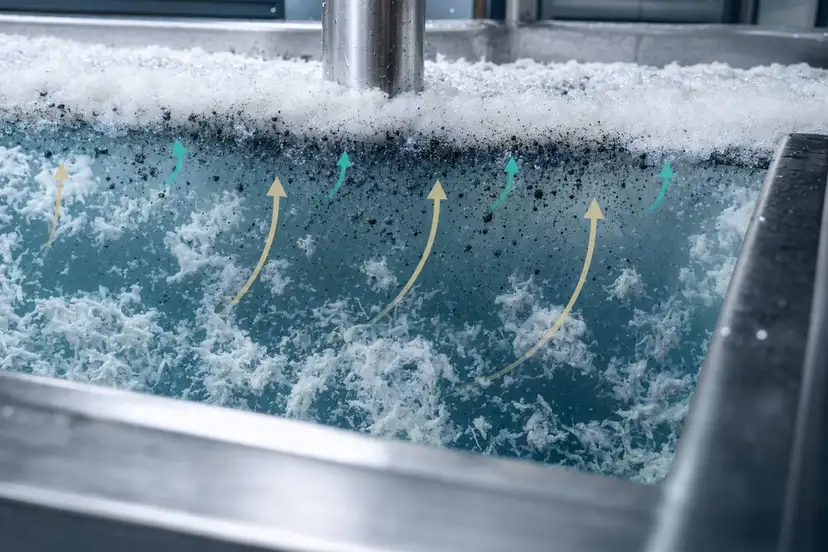
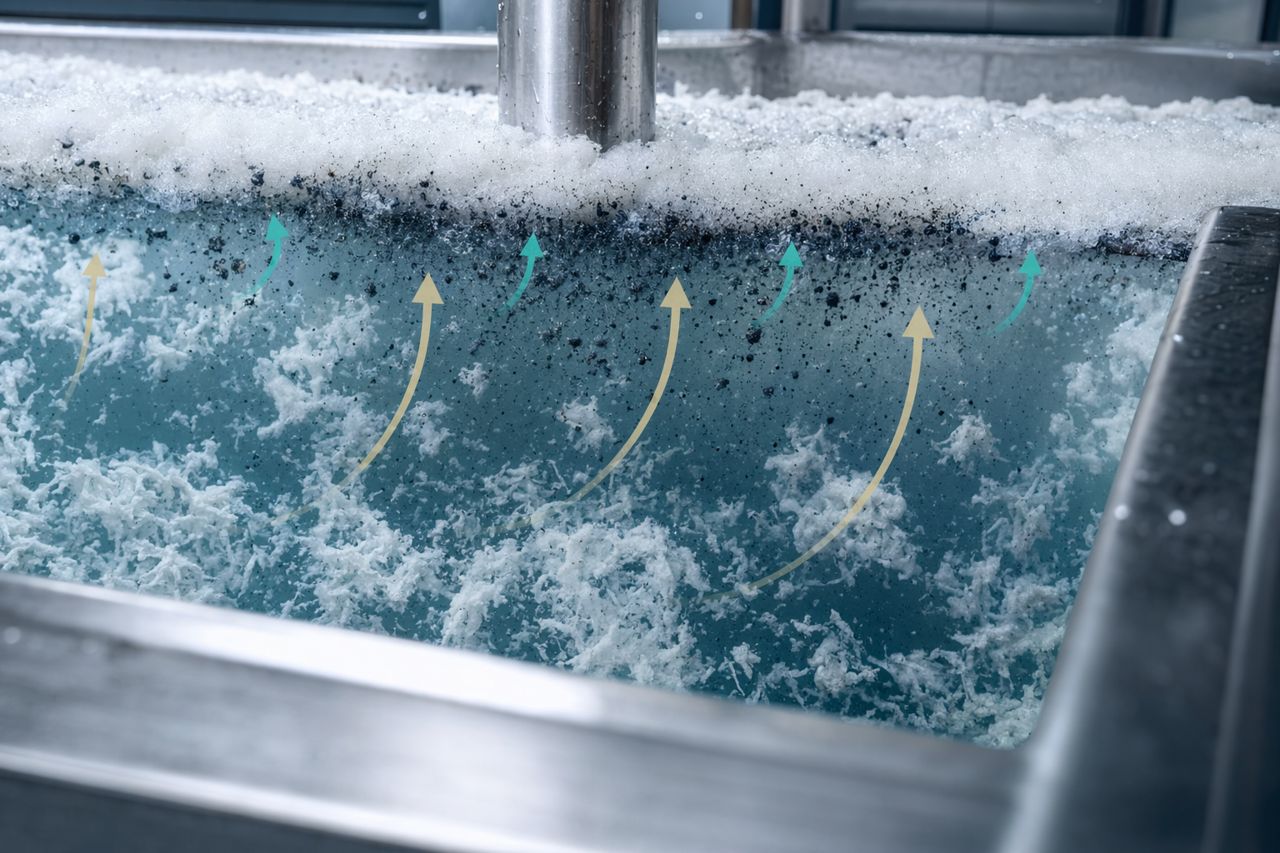
Flotation is usually the better measurement point when the mill objective is visible ink reduction, brightness gain, speck reduction, or cleaner accepts after ink separation.
Enzyme programs can support flotation by changing how ink and coating residues detach from fiber and how contaminants present to the foam phase. The trial should prove that the flotation cells are removing more of the right material without dragging excessive usable fiber into rejects.
Best measurement points for flotation trials
Use a baseline and trial comparison around the flotation loop, not only at final stock.
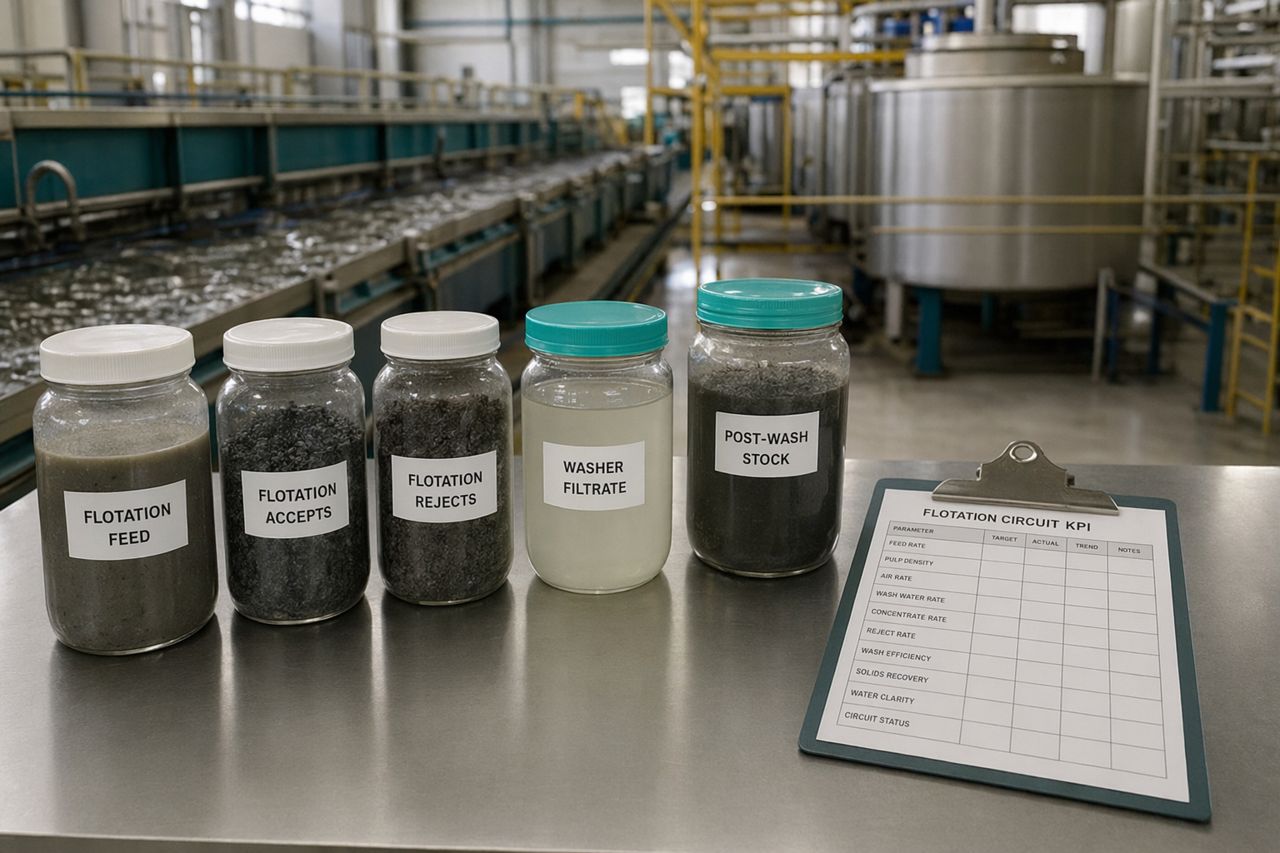
Recommended sampling positions:
- Pulper discharge or feed to pre-flotation conditioning
- Flotation cell inlet
- Flotation accepts after primary flotation
- Flotation rejects or foam concentrate
- Post-flotation stock before thickening, dispersion, or bleaching
- Final furnish point if the mill needs machine-level confirmation
KPIs that matter in flotation
Track the outcomes that show selective separation:
- Brightness gain across flotation
- Residual ink reduction in accepts
- Visible speck count and size trend
- Reject concentration and quality
- Fiber loss to foam rejects
- Ash and filler movement, if relevant to grade targets
- Stickies load before and after flotation
- Surfactant and collector demand
- Foam stability and operator control range
- Downstream bleaching chemical demand
What a good flotation enzyme result looks like
A good result is not simply a brighter inlet sample. The stronger signal is cleaner flotation accepts with manageable reject loss and stable foam behavior. If brightness improves but yield drops, the mill has not necessarily gained value. If residual ink drops while reject fiber loss stays controlled, the trial has a better operational case.
Practical mill-floor question: did the enzyme help the flotation cells remove more ink per unit of reject burden?
Washing deinking: measure drainage, fines removal, and water balance
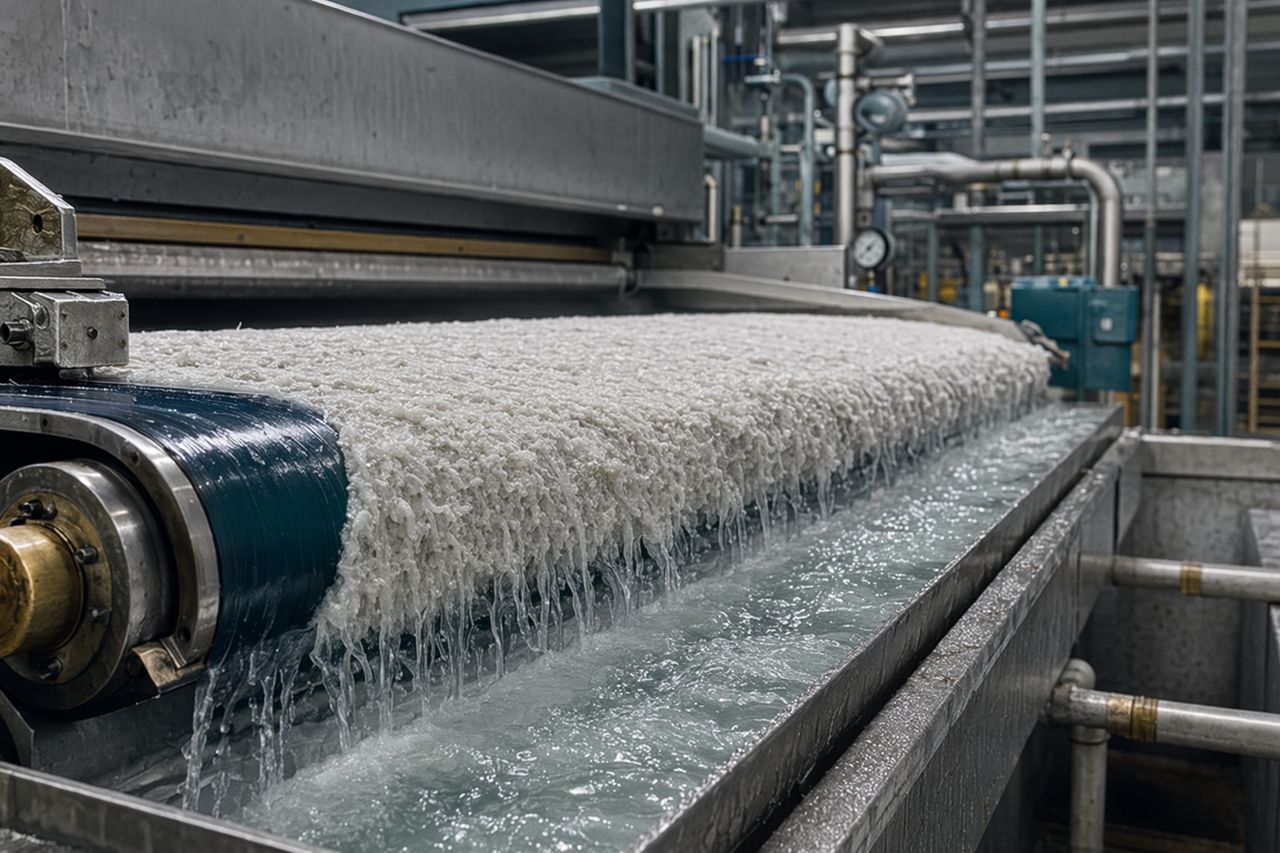
Washing is a different test. It is often the better measurement point when the bottleneck is filtrate clarity, fines loading, drainage, press performance, sheet cleanliness, or water-loop contamination.
In washing systems, enzyme value may appear less like a dramatic foam change and more like steadier dewatering, cleaner filtrate behavior, better pad formation, or lower deposits downstream. That value can be missed if the trial focuses only on brightness.
Best measurement points for washing trials
For washing trials, sample across the washer and follow the water loop.
Recommended sampling positions:
- Washer feed stock
- Washer accepts or thickened mat
- Filtrate stream
- Shower water loop or whitewater return
- Post-wash chest
- Press section or machine approach flow, when runnability is part of the target
KPIs that matter in washing
Track outcomes tied to separation, retention, and drainage:
- Ink and fines reduction in washed stock
- Filtrate clarity and solids burden
- Drainage rate and dewatering stability
- Usable fiber retention
- Ash movement and grade control
- Stickies and adhesive particle trend
- Sheet dirt count or visible defect trend
- Press section moisture stability
- Fresh water demand and loop loading
- Wastewater treatment pressure
What a good washing enzyme result looks like
A good washing result is not always the highest brightness number. The stronger result is cleaner stock with protected yield, better drainage, and lower contaminant carryover into the machine system. If the filtrate becomes heavier and the washer mat weakens, the trial may be shifting material instead of creating value.
Practical mill-floor question: did the enzyme help the washer remove the unwanted fraction while keeping good fiber in the process?
Do not compare flotation and washing with one KPI
A common trial mistake is asking one metric to judge both processes. Brightness is important, but it cannot explain everything. A flotation loop may deliver a strong ink-removal benefit that later gets diluted by furnish swings. A washing stage may improve drainage and water quality without showing a large brightness jump.
Use a KPI set that matches the process:
| Trial focus |
Flotation measurement |
Washing measurement |
| Ink removal |
Residual ink, specks, accept brightness |
Ink/fines in washed stock and filtrate |
| Yield protection |
Fiber loss in foam rejects |
Fiber retention through washer |
| Runnability |
Foam control, reject handling, downstream deposits |
Drainage, pad formation, press stability |
| Chemical reduction |
Surfactant, caustic, peroxide, dispersant demand |
Retention aid, defoamer, fresh water, treatment load |
| Stickies control |
Stickies before and after flotation |
Stickies in stock, filtrate, and downstream deposits |
The right trial design makes the enzyme effect visible where the mill actually needs improvement.
Trial controls that prevent false conclusions
Before changing the enzyme program, stabilize the operating window as much as the mill allows. Deinking trials fail when normal process movement is mistaken for treatment effect.
Hold these variables steady where possible
- Furnish source mix and bale blend
- Pulper consistency and energy input
- Temperature profile
- pH window
- Residence time before separation
- Surfactant, dispersant, caustic, peroxide, and silicate strategy
- Screen and cleaner loading
- Washer shower settings and dilution ratios
- Flotation air, foam level, and reject draw
- Thickener, press, and whitewater operating condition
Run baseline and trial periods long enough to see the system
Recovered fiber lines have memory. Whitewater loops, chests, deposits, and chemical inventories do not change instantly. A short snapshot can be useful for direction, but the commercial decision should consider steady-state behavior.
For most mills, the best approach is:
- Establish a baseline with the current chemistry and operating targets.
- Introduce the Pulprift enzyme program within the agreed application window.
- Avoid unrelated process changes during the comparison period.
- Sample around the target unit operation, not only at the final stock point.
- Confirm the effect at the machine or converting-relevant quality point.
Where Pulprift is typically evaluated
Pulprift enzyme solutions are selected around the mill objective, furnish type, and separation equipment. The program may be evaluated ahead of flotation, ahead of washing, or in a pulping or conditioning step before both.
When to evaluate before flotation
Consider a flotation-focused trial when the mill is fighting:
- Gray sheet appearance from residual ink
- High visible speck load
- Excessive bleaching demand after flotation
- Unstable foam selectivity
- High ink carryover to post-flotation stock
- Stickies passing into downstream chests
When to evaluate before washing
Consider a washing-focused trial when the mill is fighting:
- Slow drainage or unstable thickening
- High fines and ink carryover
- Poor filtrate clarity
- Elevated whitewater solids
- Press moisture variation
- Sheet defects linked to contaminants
- Water treatment or closure pressure
When to measure both
Some mills should measure both flotation and washing because the bottleneck moves by furnish. Office waste, coated recovered paper, mixed paper, cartonboard trim, and post-consumer streams do not behave the same way. If the furnish program changes by day or grade, the trial plan should include enough sample points to show where the enzyme is creating value.
Commercial value: what the mill should be able to defend
A deinking enzyme trial should support a production decision, not just a technical note. Before approval, the mill team should be able to defend at least one of these outcomes:
- Higher usable brightness at the same chemical strategy
- Comparable brightness with reduced chemical pressure
- Lower residual ink and visible dirt load
- Better drainage or dewatering stability
- Lower reject penalty for the same cleanliness target
- Fewer stickies-related breaks, washups, or deposits
- More stable runnability through the approach system and press section
- Lower whitewater and wastewater burden
- Improved yield for the required finished grade
The strongest trials connect the enzyme program to both quality and operating cost. If the result only appears in a beaker but not in accepts, rejects, filtrate, sheet quality, or machine behavior, it is not enough for a mill decision.
Recommended trial structure
Use this structure when comparing flotation and washing measurement points.
1. Define the bottleneck
Pick the primary constraint before the trial starts. Do not let every department create a different success definition halfway through the run.
Examples:
- Increase brightness without increasing peroxide demand
- Reduce residual ink after flotation
- Improve washer drainage and filtrate quality
- Reduce stickies carryover to the machine chest
- Maintain yield while lowering deinking chemistry intensity
2. Select the application window
Match the enzyme contact point to the available residence time, pH, temperature, and shear profile. The enzyme must see the fiber before the separation step it is expected to influence.
3. Sample around the unit operation
For flotation, sample inlet, accepts, rejects, and post-flotation stock. For washing, sample feed, washed stock, filtrate, and water loop. Add machine-side checks if drainage, deposits, or sheet defects are part of the value case.
4. Track quality and operating data together
Quality data without operating context can mislead. Record process settings, furnish notes, chemistry changes, reject rates, washer behavior, foam condition, and operator observations.
5. Convert results into a mill decision
At the end of the run, compare the enzyme cost against the value of brightness gain, chemical reduction, yield protection, downtime reduction, or water-loop relief. The right answer should be visible in production economics.
Pulprift view: measure where the separation happens
Flotation and washing are both deinking tools, but they answer different questions. Flotation asks whether released ink can be selectively removed. Washing asks whether fines, ink, fillers, and contaminants can be removed while protecting fiber and drainage.
Pulprift enzyme trials are built around that distinction. The measurement point should sit close enough to the process step to prove the mechanism, then far enough downstream to prove mill value.
If your mill is planning a deinking enzyme trial, Pulprift can help define the application window, sampling plan, and commercial success criteria.
Request a quote for a Pulprift deinking enzyme program review.