Pulper Conditions for Deinking Lines | Pulprift
Practical guidance on pulper residence time, temperature windows, and pH drift for paper recycling mills using enzyme-assisted deinking.
Request pricing Practical guidance on pulper residence time, temperature windows, and pH drift for paper recycling mills using enzyme-assisted deinking.
Request pricingRecovered fiber does not enter the pulper as a clean laboratory furnish. It arrives with variable ink age, coatings, adhesives, fines load, filler carryover, wet-strength pockets, and seasonal moisture swings. That variability shows up quickly in deinking performance.
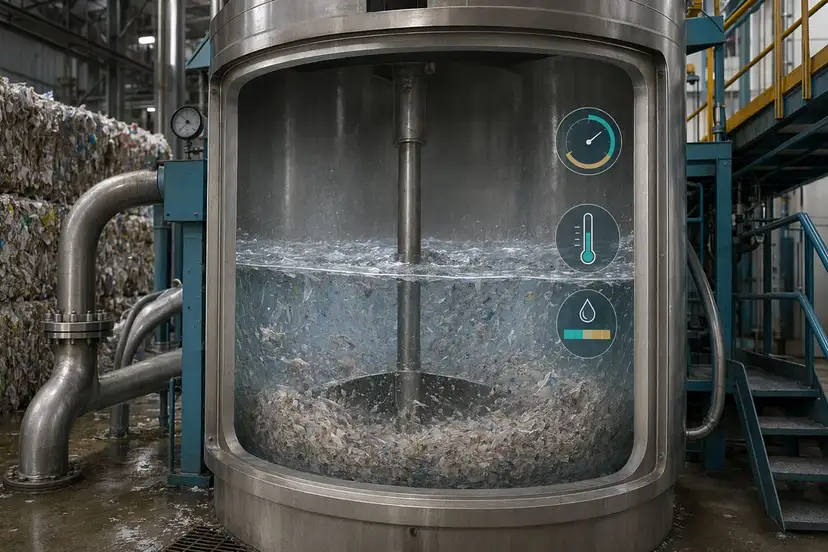
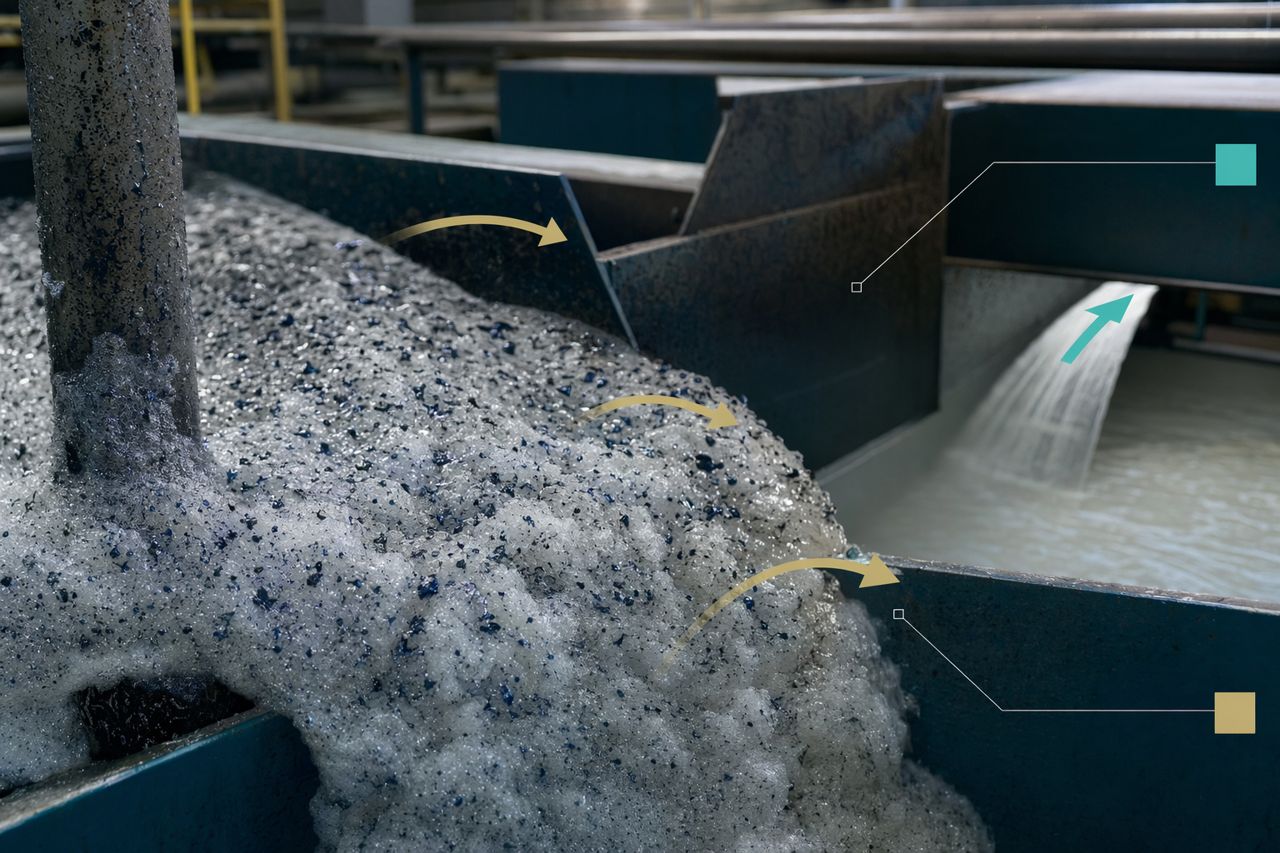
For mills evaluating enzyme-assisted deinking, the pulper is often the first control point that determines whether the chemistry has enough contact, the fiber surface is opened correctly, and the downstream flotation cell receives ink particles in a removable form.
Pulprift supports mills looking for an enzyme supplier for paper deinking mills with application guidance built around real pulper constraints: residence time, temperature, pH movement, furnish variability, drainage targets, brightness gain, stickies control, and total chemical demand.
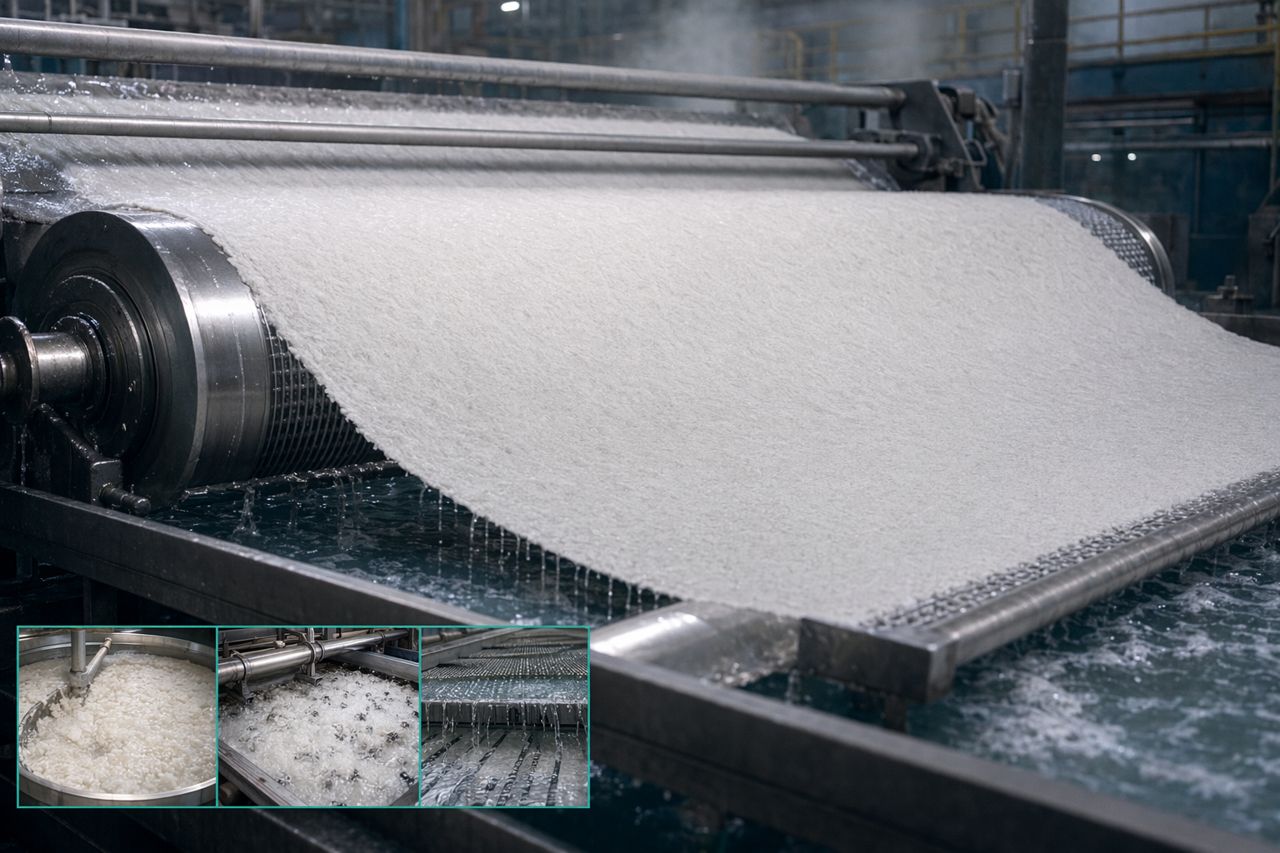
The pulper does more than separate recovered paper into slurry. It sets the surface condition of the fiber and influences how ink, stickies, coatings, and fines behave through screening, cleaning, flotation, washing, thickening, and paper machine forming.
When pulper conditions drift, mills may see:
Enzyme programs are not a replacement for process control. They work best when the mill understands the operating window where the furnish, pulper mechanics, temperature, pH, and contact time align.
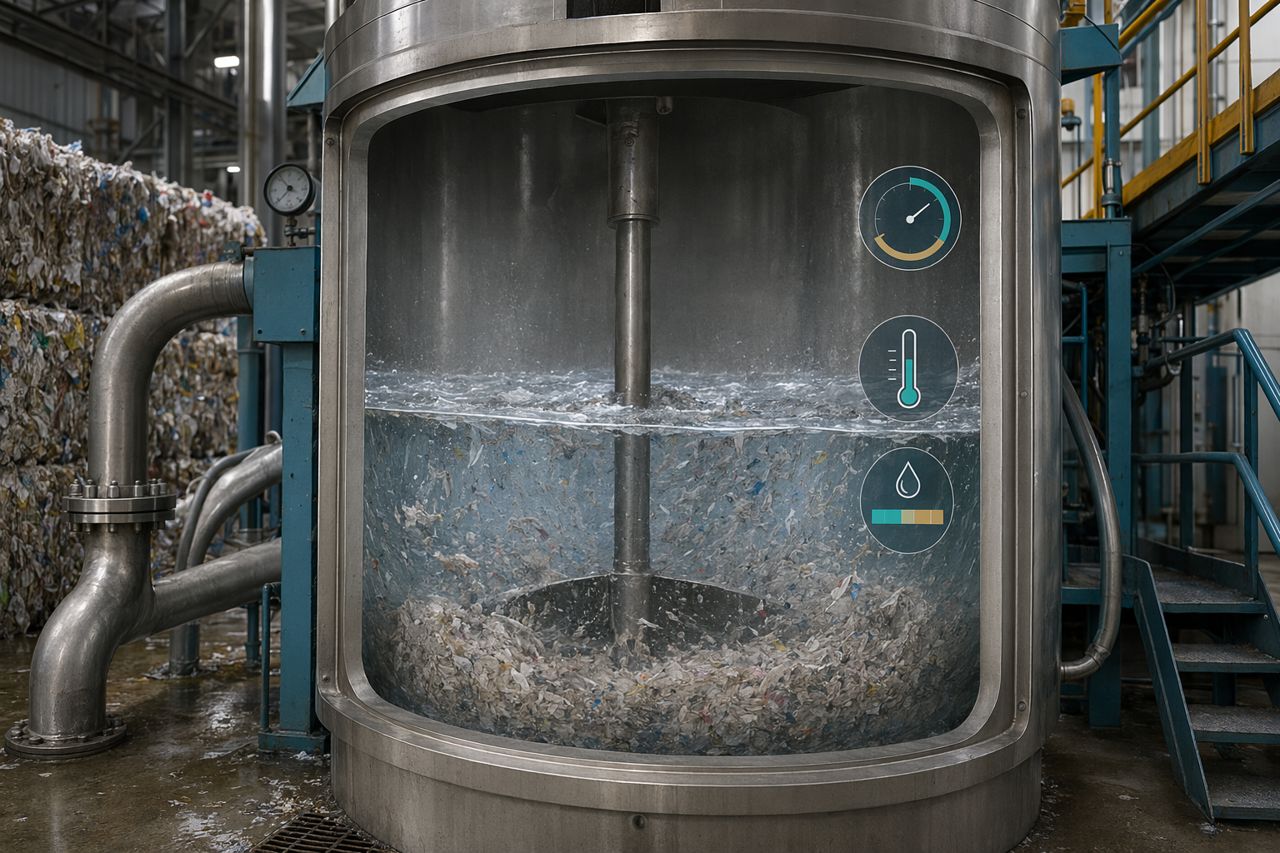
Pulper residence time controls how long recovered fiber, ink particles, adhesive fragments, water, chemistry, and mechanical energy remain together before the stock moves downstream.
Too little residence time can leave printed fragments under-conditioned. Ink may stay attached to fiber surfaces or remain as larger specks that are harder to remove later. The result is usually inconsistent flotation response and a need for more chemical correction.
Too much residence time can also create problems. Excessive mechanical action can push ink and adhesive contaminants into smaller, more dispersed forms. That may improve visual dispersion in the pulper but increase downstream removal difficulty. Overworking the furnish can also raise fines loading, affect drainage, and increase dissolved and colloidal material in the loop.
For enzyme-assisted deinking, the goal is not maximum pulping severity. The goal is controlled surface conditioning so flotation and washing can remove ink and contaminants efficiently.
Temperature affects fiber swelling, ink detachment, adhesive behavior, foam stability, and chemistry response. It also affects how enzymes interact with the furnish.
A stable temperature window is usually more valuable than chasing a hotter pulper. Excessive heat may soften pressure-sensitive adhesives and increase stickies mobility. It can also shift foam behavior and make downstream flotation less predictable. Low temperature may slow fiber conditioning and reduce the consistency of ink release.
Pulprift typically helps mills define a practical temperature band based on the furnish mix, pulper type, contact time, chemical package, and downstream removal system. The right target depends on whether the line is handling office waste, sorted graphic paper, mixed recovered paper, coated grades, magazine-rich furnish, or packaging-contaminated streams.
Temperature control should be treated as a performance lever, not just a utility setting.
pH is one of the most common causes of unstable deinking results. Recovered fiber brings alkaline fillers, acidic coatings, residual printing chemistry, wet-strength materials, adhesives, and unknown carryover from prior use. The mill adds water, caustic, peroxide, silicate, surfactants, collectors, dispersants, and retention chemistry. The pulper becomes a moving chemical system.
Enzyme programs need a pH range that supports useful fiber and ink surface modification without pushing contaminants into a harder-to-remove state. If pH drifts through the pulper cycle or between pulper and flotation feed, performance can change even when dosage and furnish appear constant.
A single pH reading at the pulper outlet may not tell the full story. Mills often get better control by checking pH at multiple points:
The key is not to collect more numbers for the sake of reporting. The key is to identify whether pH movement is causing brightness variation, froth instability, stickies dispersion, or drainage loss.
Pulprift enzyme solutions are used to support deinking objectives where recovered-fiber mills need cleaner ink release, better contaminant management, improved drainage, and more stable downstream operation.
In practice, enzyme-assisted deinking should be evaluated against mill outcomes, not isolated lab claims:
A strong application window usually includes five defined controls.
Separate trials by recovered paper mix. Office waste, sorted graphic paper, coated grades, magazine-heavy streams, and mixed paper do not respond the same way. If furnish quality changes during a trial, record it clearly.
Enzyme addition should happen where mixing, contact time, and temperature are controlled. Poor addition point selection can make a good chemistry look inconsistent.
Do not rely only on nominal pulper cycle time. Confirm real contact time and identify short-circuiting, dump delays, or chest mixing effects.
Track the actual profile, not just the target. Deinking performance often follows the process profile more closely than the recipe sheet.
Tie the program to the outcomes that matter: brightness, speck reduction, flotation rejects quality, ash movement, drainage, stickies, deposit frequency, chemical demand, and production stability.
Check pH drift, furnish ash swings, ink age, pulper temperature, peroxide timing, flotation air rate, and surfactant balance. If enzyme addition is upstream, confirm contact time and mixing.
Look at pulper temperature, mechanical severity, adhesive-rich furnish, dispersant use, screening efficiency, and whether contaminants are being fragmented rather than removed.
Review fines generation, dissolved solids buildup, whitewater closure, chest residence time, and whether downstream chemistry is being adjusted to the new fiber condition.
Check temperature, pH, surfactant carryover, ink particle size, calcium hardness, dissolved solids, and the timing of chemistry additions.
Pulprift works with paper recycling mills on controlled enzyme program evaluation. The focus is not a generic recommendation. It is a process-specific fit based on furnish, pulper design, water loop, flotation setup, washing capacity, chemical package, and production targets.
A typical support discussion covers:
Pulper residence time, temperature, and pH are not background conditions. They are active control levers in enzyme-assisted deinking. When they are stable and correctly matched to the furnish, mills can give downstream flotation and washing a better feed stream: ink released in a removable form, fiber protected from overprocessing, and contaminants managed before they become downtime.
If your deinking line is fighting brightness instability, stickies movement, drainage loss, or rising chemical demand, Pulprift can help define a practical enzyme application window for your mill.
Share your furnish type, pulper conditions, current deinking challenges, and production targets through the on-site request form. Pulprift will review the process fit and respond with a quote pathway for your mill.
Tell us your application and volume — we reply with pricing and lead time.